
Fantasy World Manager Gameplay: Build Then Watch
Fantasy World Manager gameplay: paint a map, define items, races and factions in editors, then watch heroes and settlements simulate it.
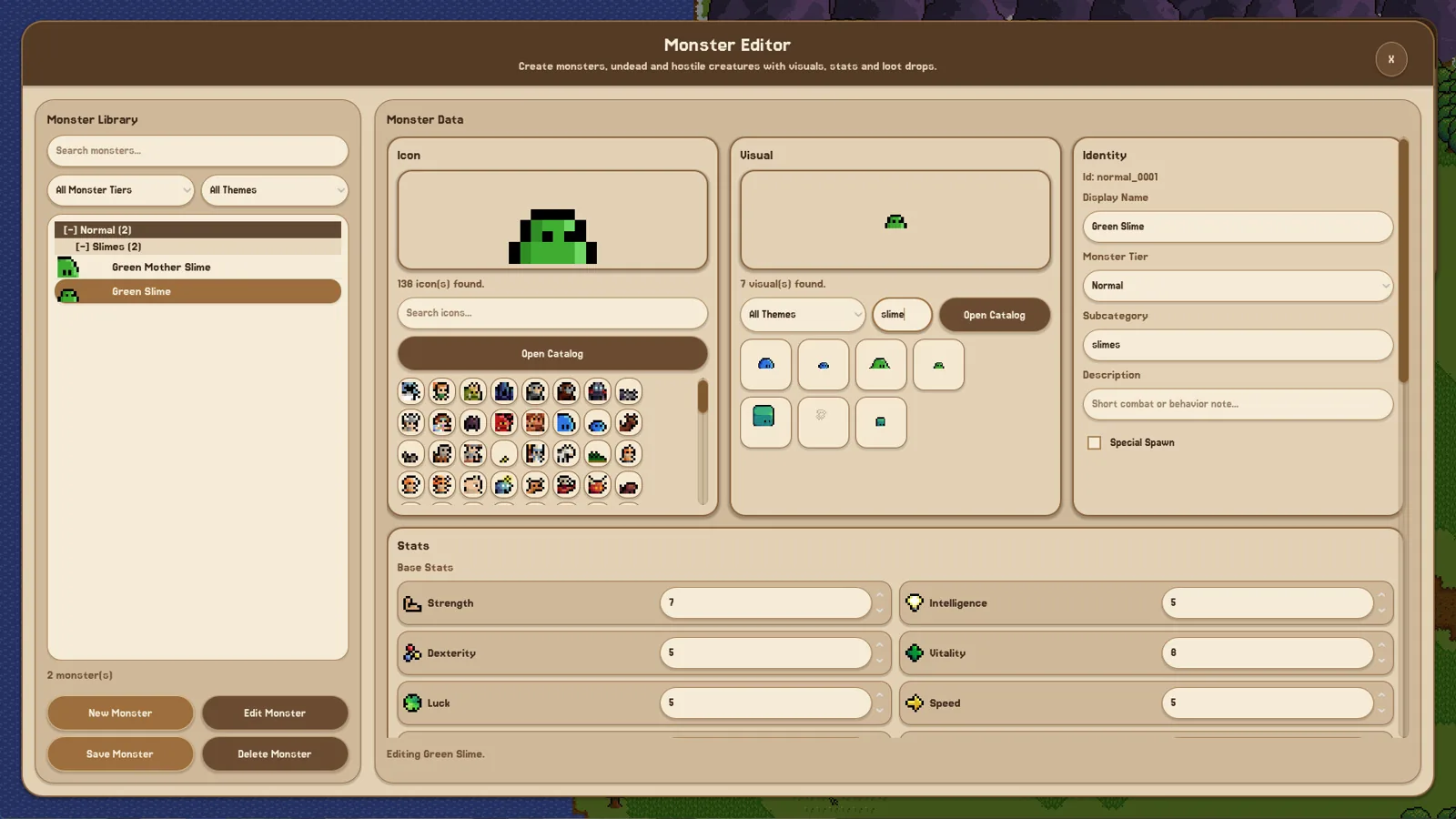
Table of Contents
Fantasy World Manager gameplay is worldbuilding first and management second. You use a chain of editors to lay down terrain, items, points of interest, races, cultures, religions, factions and zones — then you start the simulation and watch heroes, settlers, animals and monsters act on what you built. It plays closer to a god-game sandbox than to a city builder where you place and command everything by hand; the official Steam page describes it as a "gamified tool for creating, simulating, and observing living fantasy worlds."
The loop: build a world, then let it run
A session moves through three phases:
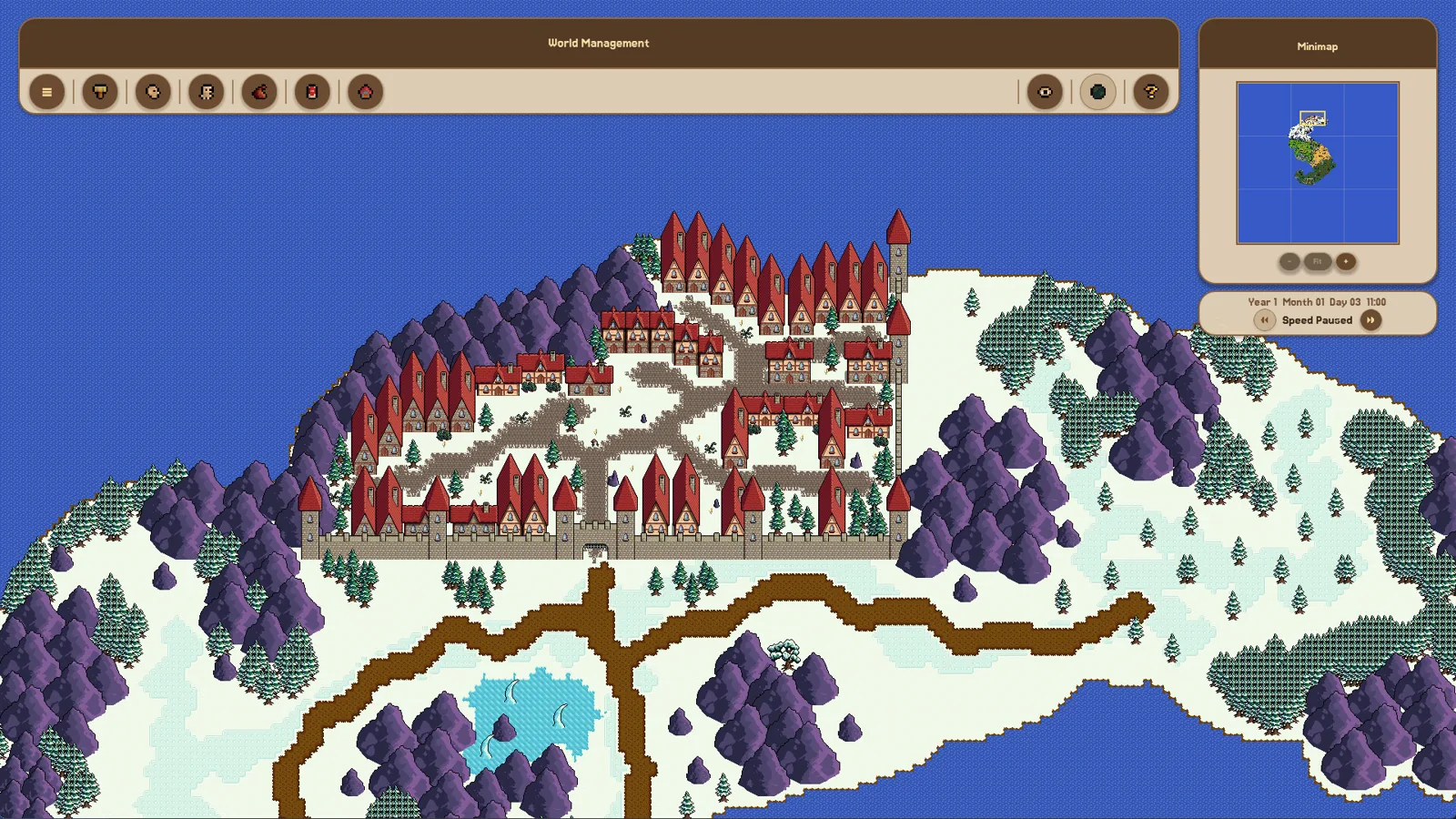
- Shape the land. The Exterior editor paints ground tiles and places trees and mountains. Nothing is pre-built, so the map starts as terrain only.
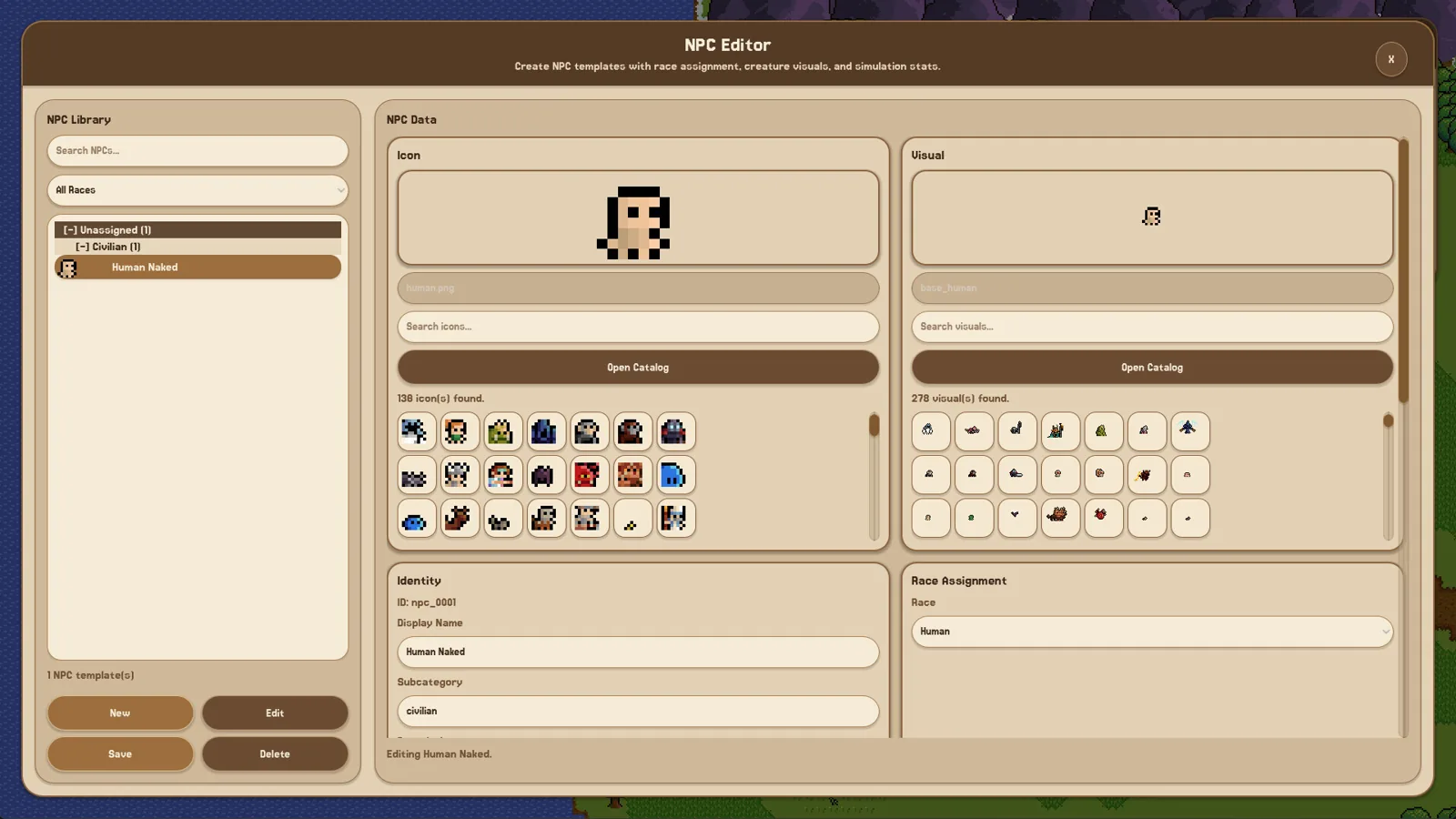
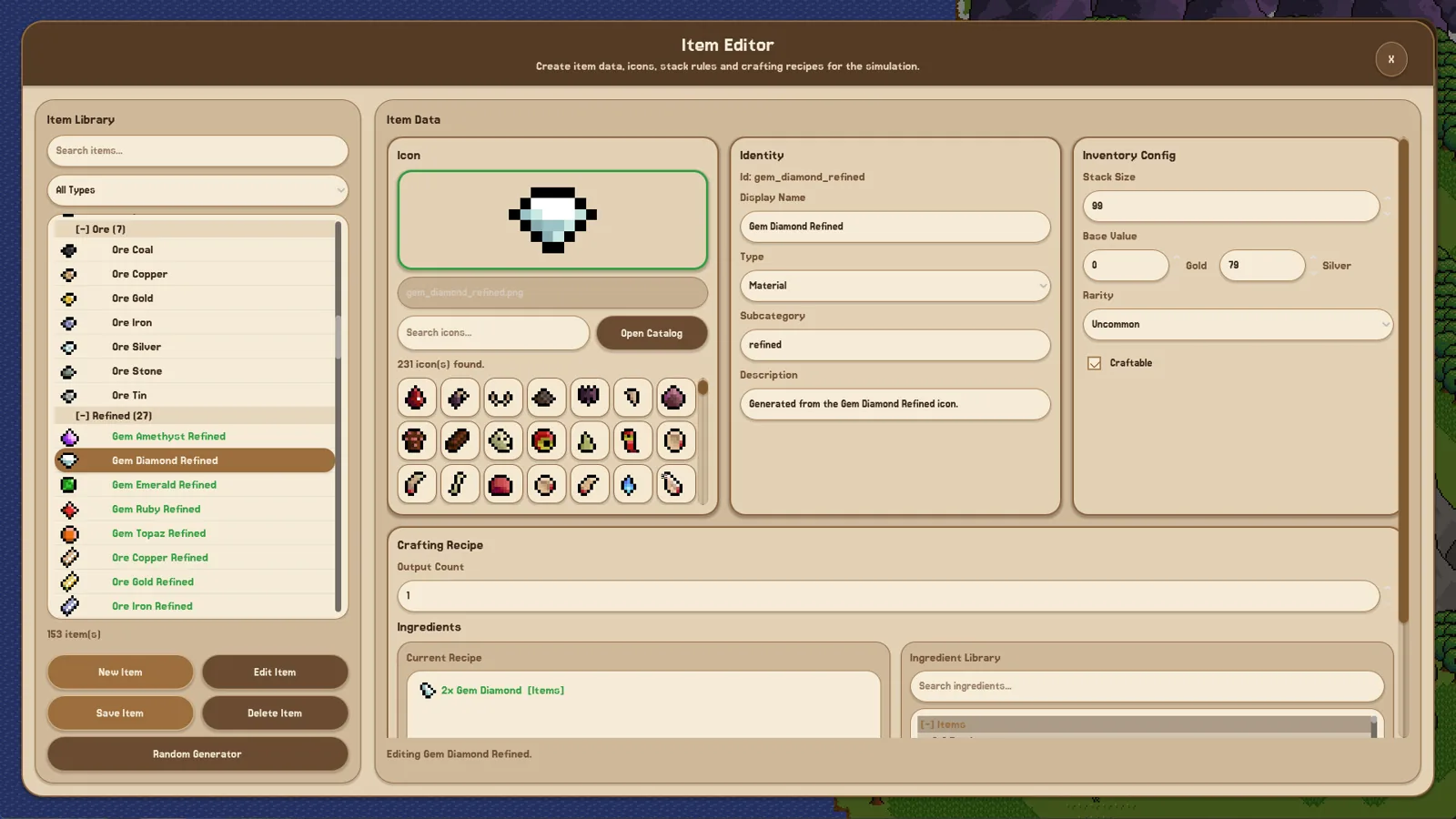
- Define the pieces. Separate editors cover items (food, materials, weapons, armor, accessories), points of interest (POIs), races, cultures, religions, factions, NPCs, animals, monsters and zones. Each editor produces the data the simulation reads later.
- Run and observe. Once zones have a faction owner and creature spawns, you raise the time speed and watch. Speed modifiers go up to x5; the developer's Patch 4 notes give one in-game year as roughly 48 minutes at that speed.
The demo tutorial states that the order matters — a world comes alive through resources, equipment, POIs, drops, NPCs, factions, city zones, farm zones and creature spawns, roughly in that sequence. A player walking through it in the first demo playthrough found the tutorial asked them to paint land, then create a food item such as meat, then a wood material, then a weapon, armor and accessory, then a tree POI configured to drop wood.
What the editing actually involves
Editors are form-driven rather than preset. In the demo builds players tried, creating a race meant typing a name and description, choosing a category and icon, and assigning baseline stats and modifiers; cultures and religions worked the same way with their own bonuses. Items needed a type, subcategory, description, icon, base value, rarity and stack size. A tree POI needed a visual, a minimap icon, and a drop table — for example one to five wood at full drop chance.
If that sounds like a lot of typing before anything moves, that is a common complaint. In a Steam discussion, one player described the tutorial as overwhelming — painting an unrestricted map, planting decorative trees, and manually creating wood, a race, a culture and a religion — and said it did not feel like a management game. A second player compared the first impression to RPG Maker.
The developer replied that prefabs and random generators were planned so players would not be forced through time-consuming entity creation, and acknowledged that the race, culture and religion editors did not offer much variation at that point even though each plays a role in the simulation. Patch 5 later added a prefab system and a shorter tutorial, and the developer confirmed Steam Workshop support at launch for worlds, prefabs and custom sprites.
What the simulation does with your setup
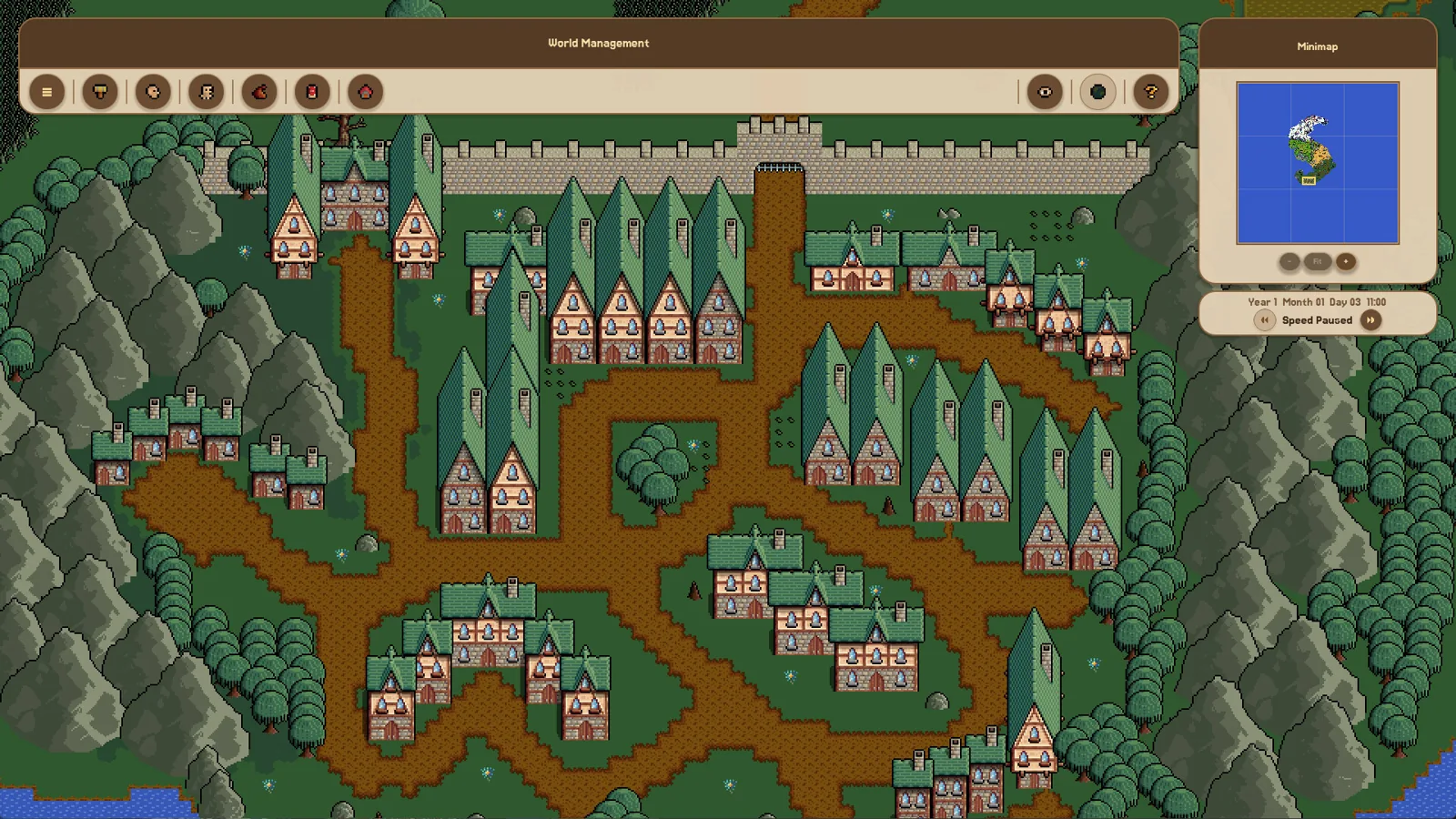
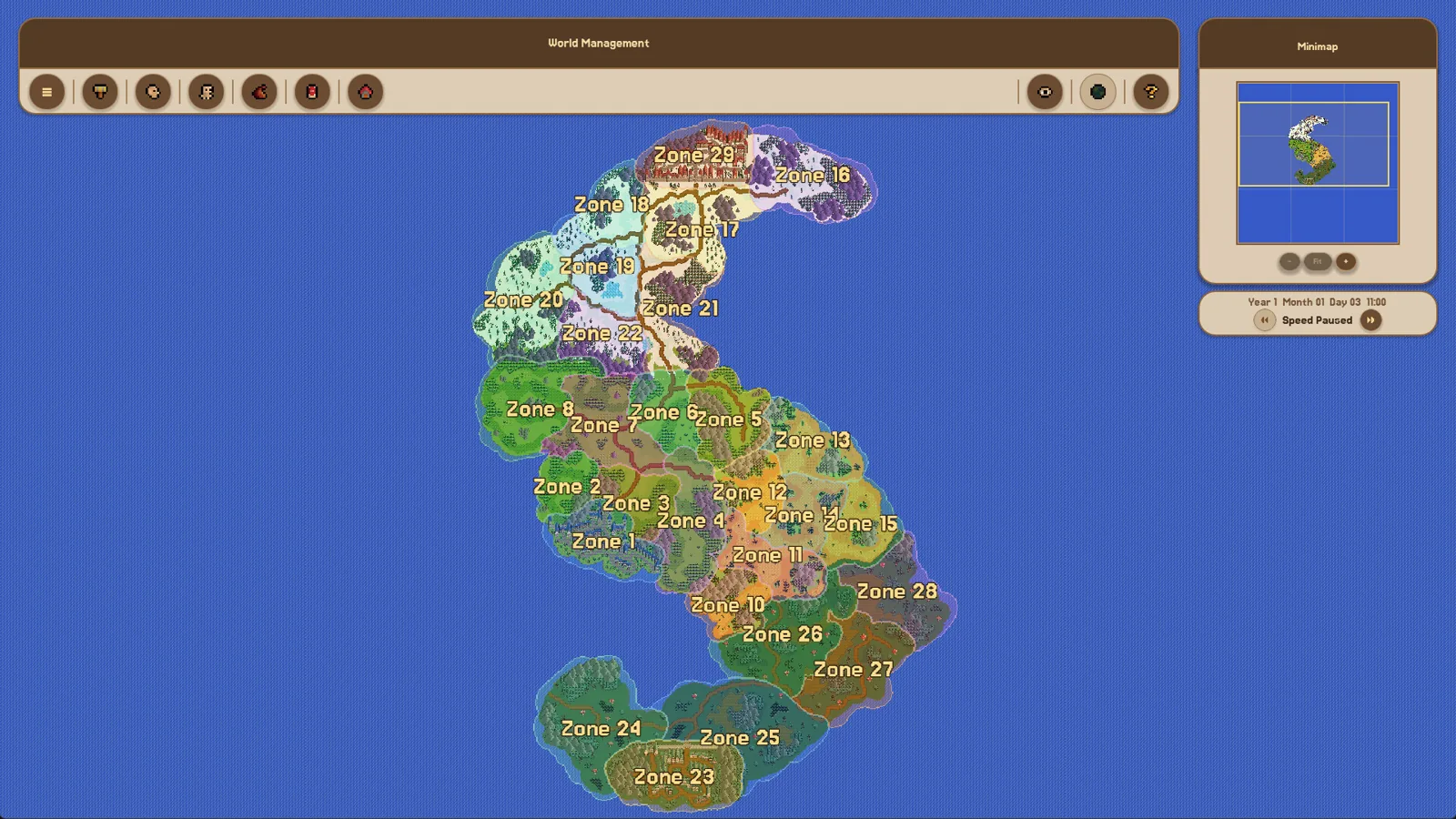
Food is the first critical item — the demo tutorial warns that city populations starve without it — so early play is about getting a farm zone producing and connecting it to a city. Heroes travel to zones, chop tree POIs, mine ore, hunt animals, and carry the results into the faction economy, which feeds later crafting. Zones can be captured for a faction, and the map pulses red in overview mode where conflicts exist.
Combat and politics exist but were thin in the demo builds. Patch 3 notes from June 2026 admitted wars were not happening in 99.9% of cases, and Patch 6 still listed diplomacy as an open issue. Patch 7 added government types — democracy, dictatorship, monarchy and round table — plus a trait system, royal families and noble houses, all of which shape how factions decide. Treat wars and dynasties as systems in progress rather than reliable early-game drama.
Practical notes before you start
- Open the guidebook. Patch 5 added a Guidebook that can be opened in all editors with F1 and holds basic help; the developer said it would be expanded.
- Use prefabs instead of building every entity. The prefab system imports and exports editor content, which is far faster than recreating wood, races and cultures from scratch.
- Expect a slow clock. Time is deliberately slow at low speeds, and population growth reflects that; raising speed is the intended answer rather than waiting.
- If a step seems to do nothing, check the zone owner and the spawn settings. The demo's chain depends on a city zone having a faction before population appears, and on farm zones touching the city before harvesting works.
Version and platform limits
The gameplay details above come from demo builds circulated between roughly June and July 2026, so the Early Access release on October 28, 2026 may change menus, balance and tutorial length. An early playthrough author estimated the tutorial at around 30 minutes, while Patch 5 notes describe the reworked tutorial as 5–10 minutes — the difference reflects the demo version, not a contradiction.
Early Access is planned to last about a year, with a $15 USD base price and a launch discount of 10–20 percent. As of 2026-10-24, the official Steam page lists Windows among platforms, and its system requirements name Windows 10.
FAQ
What should I expect from Fantasy World Manager gameplay?
Mostly creative setup followed by observation. You build terrain, items, races, cultures, religions, factions and zones in editors, then watch heroes harvest, hunt, capture zones and supply their factions. Direct command of individual units is limited in the demo builds.
Is Fantasy World Manager a management game or a worldbuilding tool?
Both, with the balance tilted toward worldbuilding. The developer calls it a gamified tool for creating and simulating worlds, and players who expected a conventional management loop often found the entity-creation steps heavy — which is why prefabs and random generators were added or planned.
How long does the tutorial take in Fantasy World Manager?
It depends on the demo build. A playthrough author estimated roughly 30 minutes for the version he tried, while the developer's Patch 5 notes describe the reworked tutorial as 5–10 minutes, so newer builds should be considerably quicker.
Does Fantasy World Manager have wars and combat?
Heroes fight monsters and battles are part of the design, but early demo builds rarely produced wars between factions. The developer worked on balancing and later added government types, personality traits and noble houses that influence faction decisions, so politics is an area still being developed.
Related guides for this game
Media Guides Index
Fantasy World Manager Trailer: Where and What to Watch
Where to watch the April 2026 announcement trailer, what its scenes cover, and how the demo's simulation compared with the trailer's promises.
Comparison Guides Index
Fantasy World Manager vs WorldBox: Build It or Watch It?
Fantasy World Manager is a build-it-yourself world sim; a WorldBox-style automatic mode is planned, not the main mode.
Guide Guides Index
Fantasy World Manager how to build houses: POI & Prefab Tips
Houses in Fantasy World Manager are placed as building POIs with footprints and entry markers, then filled by simulated residents; prefabs speed it up.
Access Guides Index
Fantasy World Manager Demo: What Was Available
The demo launched before Steam Next Fest in June 2026 with locked editors; the official Steam page did not list a demo download as of 24 October 2026.
Fantasy World Manager Download: Where to Get It
Fantasy World Manager isn't downloadable as a full game yet — the Steam page lists Oct 28, 2026 for Early Access. Where to get it, price, and demo status.
Fantasy World Manager Playtest: The Demo Before Launch
No separate playtest sign-up: players tried Fantasy World Manager through the free June 2026 Steam demo ahead of the Oct 28, 2026 Early Access launch.